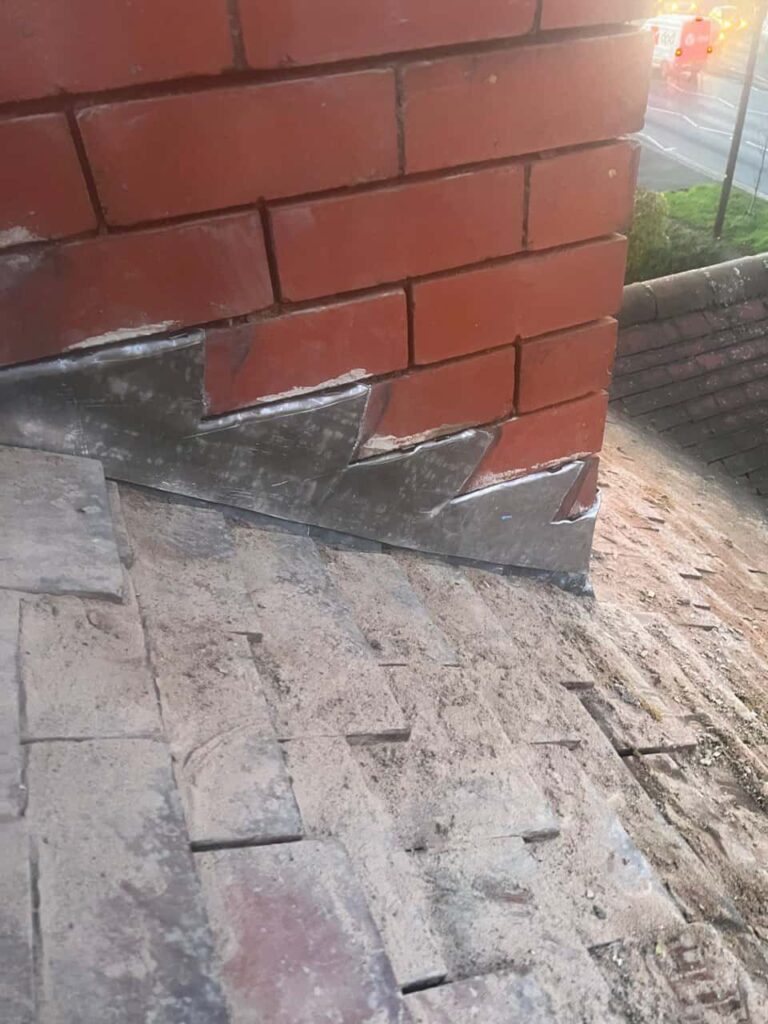
Lead flashing plays an important role in keeping a roof watertight. It forms a protective barrier around vulnerable junctions, such as chimneys, roof valleys, walls and roof extensions, where rainwater could otherwise enter the building. Although lead is durable and flexible, it can still deteriorate, become displaced or develop defects over time.
For homeowners in Sawston, Cambridgeshire, damaged lead flashing can be an easily overlooked cause of persistent roof leaks. Recognising the warning signs early can help prevent moisture from damaging ceilings, walls, roof timbers and internal finishes. Sawston Roofing Repairs provides professional roofing services to identify flashing problems and carry out suitable repairs to help protect your property.
What Is Lead Flashing and Why Is It Important?
Lead flashing is a weatherproofing material installed at joints and transitions in a roof. It directs rainwater away from vulnerable areas and back onto the roof covering, where it can drain safely towards the gutters.
It is commonly found around chimney stacks, where pitched roofs meet walls, and at other junctions that require additional protection against water ingress. These areas are particularly exposed to wind-driven rain and changes in weather conditions.
When flashing is correctly installed and maintained, it helps prevent water from penetrating gaps between roofing materials and adjoining structures. However, even a relatively small defect can compromise this protection and allow moisture to enter the roof space.
Common Lead Flashing Problems That Cause Roof Leaks
1. Cracked or Split Lead Flashing
Lead can develop splits or fatigue cracks after years of exposure to temperature changes and repeated movement. These defects may occur around chimney stacks, roof junctions and other areas where flashing experiences stress.
Once the lead splits, rainwater can pass through the opening and reach the underlying roof structure. The resulting leak may not become immediately visible inside the property, as water can travel along timbers or beneath roofing materials before appearing on a ceiling.
A roofer can assess the extent of the damage and determine whether a localised repair or replacement of the affected section is the most suitable option.
2. Loose or Displaced Flashing
Strong winds, deteriorating fixings and movement around roof junctions can cause lead flashing to lift or become displaced. When this happens, gaps may form between the flashing and the surrounding masonry or roofing materials.
These openings allow rainwater to enter, particularly during periods of heavy rainfall or windy weather. If the flashing continues to move, the gap may widen and the surrounding materials may also become vulnerable.
Professional repairs restore the flashing to its intended position and address the cause of the displacement wherever possible.
3. Failed Mortar Around Chimney Flashing
Lead flashing around chimneys is often secured into joints in the masonry. Over time, the mortar surrounding these joints can crack, crumble or loosen due to weather exposure and natural deterioration.
When the mortar fails, the flashing may no longer sit securely against the chimney stack. Rainwater can then enter behind the lead and penetrate the roof structure.
Effective repairs may involve renewing the defective mortar joint, securing the flashing correctly or replacing damaged sections. The appropriate treatment depends on the condition of both the lead and the surrounding masonry.
4. Poorly Installed or Ageing Flashing
Lead flashing must be properly formed and fitted to provide reliable weather protection. Incorrect overlaps, unsuitable detailing or inadequate fixing can create weak points that allow water to pass through.
Ageing flashing can also become less effective as the surrounding materials deteriorate or the roof undergoes movement. In some cases, repeated patch repairs fail to resolve the underlying installation problem.
A professional inspection helps establish whether the existing flashing can be repaired effectively or whether more extensive work is needed to restore a watertight junction.
Signs That Your Lead Flashing Needs Repair
Flashing defects are not always easy to identify from ground level. However, several warning signs may indicate a problem:
- Damp patches or brown staining on ceilings near a chimney or external wall.
- Water marks appearing in the loft after rainfall.
- Visible gaps, lifted edges or damaged lead around roof junctions.
- Crumbling mortar where flashing enters a chimney stack.
- Repeated leaks in the same area despite previous roof repairs.
These symptoms can have several possible causes, so it is important not to assume that the flashing is responsible without a proper assessment. Water may enter through nearby damaged tiles, defective roof coverings or other vulnerable junctions.
If you notice signs of a leak, avoid climbing onto the roof to investigate. A qualified roofing professional can examine the affected area safely and identify the likely source of the problem.
How Professional Lead Flashing Repairs Help Prevent Further Damage
Effective lead flashing repairs begin with identifying where water is entering and assessing the condition of the surrounding roof. This includes checking the lead itself, its fixings, adjoining masonry and nearby roof coverings.
Depending on the findings, repairs may involve resecuring displaced flashing, addressing failed mortar joints, repairing suitable localised defects or replacing sections that are too damaged to provide reliable protection.
It is also important to check for moisture damage beneath the visible defect. If water has been entering the roof for some time, the underlying materials may need attention alongside the flashing repair.
Sawston Roofing Repairs can help property owners in Sawston, Cambridgeshire, investigate suspected flashing problems and arrange appropriate repairs. Addressing the cause of a leak, rather than simply covering the visible symptoms, helps provide a more dependable long-term result.
Conclusion
Lead flashing is essential for protecting vulnerable roof junctions from rainwater, but cracked lead, loose edges, deteriorating mortar and poor installation can all lead to roof leaks. Identifying these problems early can help limit water ingress and prevent further damage to your property.
If you have noticed damp patches, recurring leaks or visible damage around your chimney or roof junctions, Sawston Roofing Repairs can assess the condition of your flashing and recommend suitable remedial work. Contact the team to arrange a professional inspection and help keep your roof watertight in Sawston, Cambridgeshire.
Call us on: 01223 679 993
Click here to find out more about Sawston Roofing Repairs
Click here to complete our contact form and see how we can help with your roofing needs.